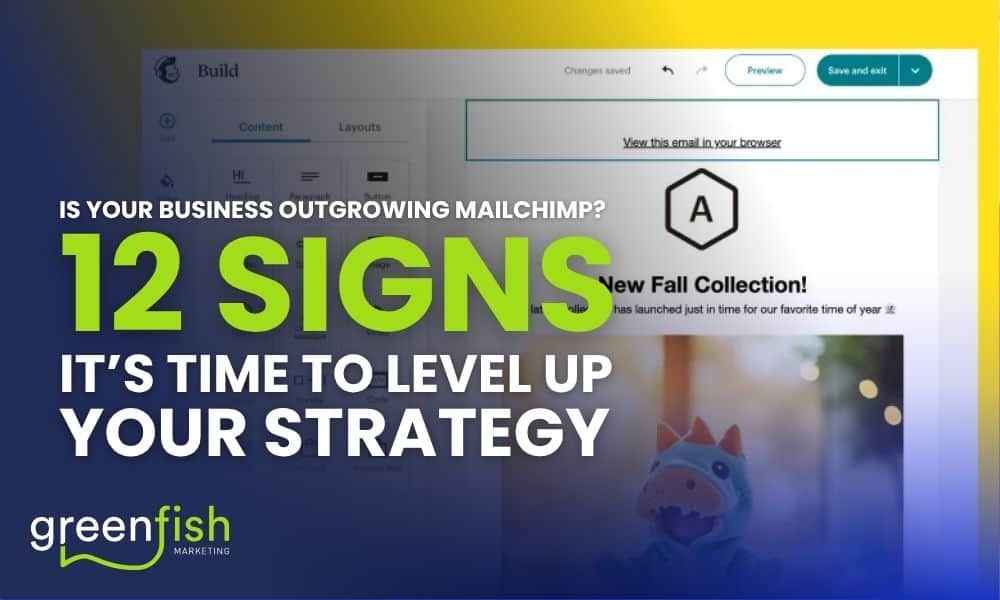
Many businesses start their journey with Mailchimp. It’s a household name, and its “all-in-one” approach is a great entry point for those just getting started with email.
However, there comes a point in every successful company’s growth where “standard” isn’t enough. As your data grows more complex and your audience expects more personalization, you might find that the tools that helped you start are now the ones keeping you from scaling.
If you’re feeling the friction, you’re not alone. Here are 12 reasons why your business might have outgrown Mailchimp and why a more specialized platform could unlock your next level of revenue.
1. The “Switching Cost” Fallacy
The biggest reason businesses stay with Mailchimp isn’t because it’s the best fit—it’s because the thought of moving feels overwhelming. We often fear the time it takes to learn a new system or migrate data. However, modern platforms now offer “one-click” migrations and dedicated onboarding support, making the transition far more seamless than it was five years ago.
2. Complex Data Mapping
While Mailchimp allows you to export your audience, the challenge lies in the utility of that data. As you scale, you need your purchase history, browsing behavior, and custom events to talk to each other perfectly. Moving to a dedicated eCommerce specialist allows you to map this data more intuitively, turning raw numbers into actionable marketing insights.
3. The Need for Granular Personalization
Mailchimp offers solid personalization, but high-growth brands often need to go deeper. When you need to trigger content based on specific product categories viewed, or “time since last purchase” across multiple channels, you need a platform built specifically for high-velocity data. It’s the difference between a “first name” tag and a truly bespoke customer journey.
4. Advanced Automation Logic
Mailchimp’s Customer Journey Builder has come a long way, offering split-path logic and branching. However, for eCommerce power users, “good” isn’t enough. Specialized platforms allow for more complex triggers—like syncing your flows with real-time inventory or external API data—ensuring your automations are as sophisticated as your business model.
5. Real-Time Behavioral Segmentation
Mailchimp’s predictive segmentation is a great tool, but as your list grows, you need segments that update in true real-time based on granular behaviors (like “added to cart but didn’t buy in the last 2 hours”). Specialized tools often handle these high-frequency data updates with more agility, leading to higher engagement.
6. Deep-Dive eCommerce Synergies
While Mailchimp integrates with Shopify and WooCommerce, there can often be a “sync lag” or a limit to how much historical data is visible at a glance. Moving to an eCommerce-first platform means your store and your email tool act as one single brain, giving you a 360-degree view of every customer’s lifetime value (CLV).
7. Unified Multi-Channel Strategy (SMS + Email)
Mailchimp has entered the SMS space, but for a truly “omnichannel” feel, you need deep synchronization. The goal is to ensure a customer never receives an SMS for a product they just bought via email five minutes ago. Specialized platforms are often built from the ground up to prioritize this cross-channel harmony.
8. The Cost-to-Value Ratio
Mailchimp’s pricing is based on your total contact list, which can escalate quickly as you grow. When your bill hits a certain threshold, it’s worth asking: Am I paying for a generalist tool, or am I investing in a specialist tool that generates more ROI per contact? Often, the “expensive” platform pays for itself through better conversion tools.
9. Advanced Revenue Attribution
To scale with confidence, you need to know exactly which email drove which dollar. While Mailchimp provides revenue tracking, specialist platforms often offer more nuanced attribution models, helping you understand the “assist” value of your newsletters and automated flows in the overall customer journey.
10. Proactive Strategy vs. Reactive Support
Mailchimp offers 24/7 chat for paid plans, which is great for “how-to” questions. However, as a growing brand, you often need strategic support. Specialized platforms and agencies often provide deeper insights into industry benchmarks and growth hacks that go beyond simple technical troubleshooting.
11. Conversion-Centric Template Flexibility
Mailchimp’s templates are designed for ease of use and mobile responsiveness. But when you want to push the boundaries of design—think dynamic product grids, countdown timers, and unique brand aesthetics—you might find a specialized builder offers more creative freedom without needing to hard-code every email.
12. Maximizing Customer Lifetime Value (CLV)
Mailchimp is an excellent “sender.” But for sustainable growth, you need a “retention engine.” By moving to a platform designed for lifecycle marketing, you can focus on the metrics that matter most: repeat purchase rate, churn reduction, and long-term brand loyalty.
The Takeaway
Mailchimp is a fantastic tool that has helped millions of businesses get off the ground. But if you find yourself hitting a ceiling, it might be time to stop “making it work” and start using a platform that works for you.
Don’t let the fear of change hold back your revenue.
Ready to see what your data can really do? Apply for a FREE Mailchimp Audit (Worth $495). We’ll look under the hood of your current setup and show you exactly how much growth you’re leaving on the table.
Claim your free Mailchimp audit. We can show you how your account is really working. Choose your date and time below: